
CPR and Resuscitation Guidelines: What Is Current in the UK
The Resuscitation Council UK Guidelines 2025 superseded the 2021 guidelines. The adult CPR numbers that matter, when to use an AED, and the three things that actually changed.
Enquire about this training
Tell us what you need and we will come back with dates and a price.
Or call 0845 838 4643
Quick answer
The current UK resuscitation guidance is the Resuscitation Council UK Guidelines 2025, which superseded the 2021 guidelines. For adult basic life support the core numbers are unchanged: compress the chest at 100–120 compressions per minute, to a depth of at least 5 cm but not more than 6 cm, at a ratio of 30 compressions to 2 rescue breaths if you are trained and willing to give them, and use an AED as soon as one is available. Untrained rescuers should give continuous chest compressions without pauses.
Resuscitation guidance is reviewed on a rolling basis by the International Liaison Committee on Resuscitation (ILCOR) and the European Resuscitation Council, and Resuscitation Council UK publishes the UK version. The 2025 Guidelines are the product of a four-year process and are what UK first aid training now follows.
If you last did a first aid course some years ago, this page tells you what is current — and what has genuinely changed.
The numbers at a glance
| Current guidance | Why it matters | |
|---|---|---|
| Compression rate | 100–120 per minute | Too fast and the chest cannot recoil, so the heart does not refill |
| Compression depth | At least 5 cm, not more than 6 cm | Too shallow generates no circulation; too deep causes injury without benefit |
| Ratio (trained) | 30 compressions : 2 breaths | Balances circulation against interruption |
| Untrained or unwilling | Continuous compressions, no pauses | Compression-only CPR is far better than no CPR |
| Hand position | Heel of one hand, lower half of the sternum | Other hand on top, fingers interlocked, arms straight |
| Recoil | Allow full chest recoil between compressions | This is where the heart refills |
| AED | As soon as it is available | Survival falls with every minute before defibrillation |
| 999 | Call early, speaker on | 2025 change — call without first confirming abnormal breathing |
Adult basic life support: the current sequence
- Check for danger and make sure it is safe to approach.
- Check for a response. Gently shake the shoulders and ask loudly if they are all right.
- Open the airway and check breathing.
- Call 999 and ask for an ambulance. Put the phone on speaker so your hands stay free.
- Send someone for an AED if anyone else is present.
- Start chest compressions: heel of one hand on the lower half of the sternum, the other hand on top with fingers interlocked, arms straight, shoulders directly above the chest. Compress at 100–120 per minute, at least 5 cm but not more than 6 cm deep, allowing the chest to recoil fully between compressions.
- If trained and willing, add rescue breaths — 30 compressions to 2 breaths. If you are not trained, or are unwilling to give breaths, give continuous compressions without stopping.
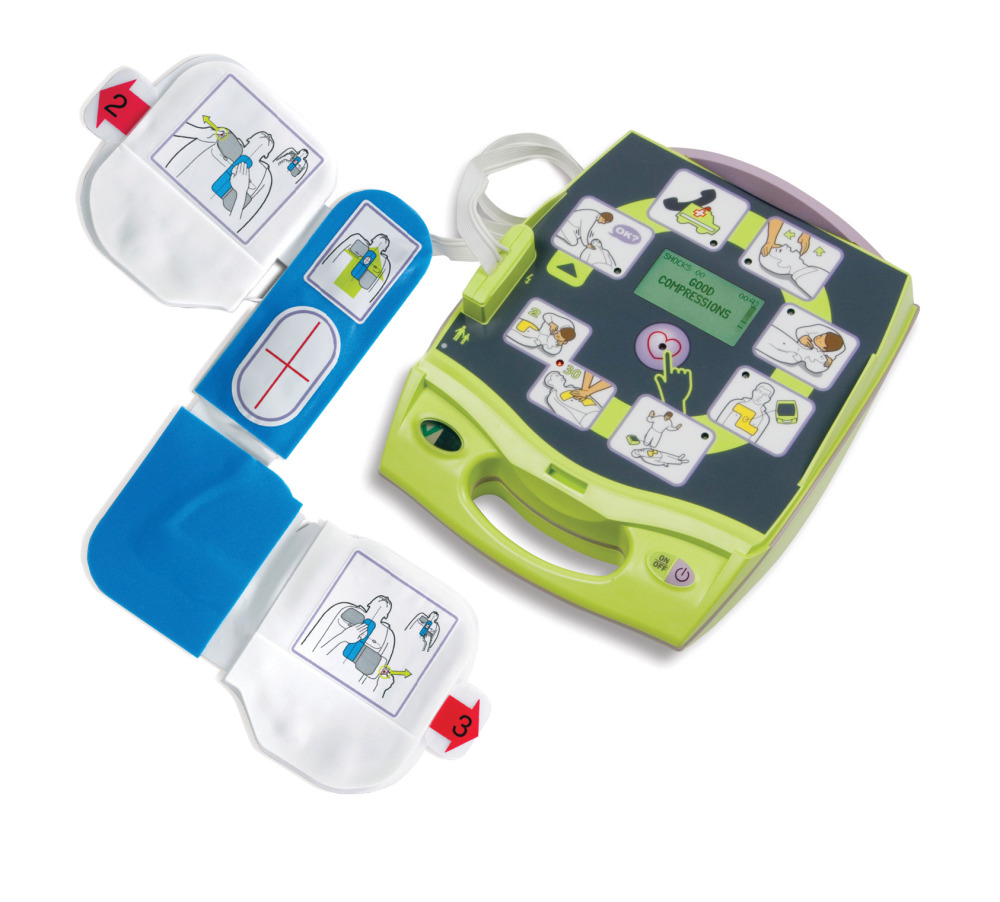
- Use the AED as soon as it arrives. Follow its spoken prompts, attach the pads to bare skin, make sure nobody is touching the person while it analyses, and restart compressions immediately after any shock.
What changed in the 2025 guidelines
The compression numbers did not change. What changed is around them:
- Calling 999 earlier. Rescuers are now directed to call 999 without first having to confirm that breathing is abnormal — you assess while the call is connecting, rather than delaying the call to be sure. In an out-of-hospital cardiac arrest, the minutes spent deciding are the minutes that matter.
- Recognising cardiac arrest in athletes. The guidance now acknowledges that breathing immediately after a collapse can look near-normal or appear as panting, rather than only the slow, laboured pattern people are usually taught to look for. Sudden cardiac arrest in sport is easy to mistake for something less serious.
- Support for the rescuer. The guidelines now recognise explicitly that lay rescuers may need psychosocial support after attempting resuscitation. Attempting CPR on someone is a significant thing to go through, and most attempts are not successful.
That last point deserves more attention than it usually gets. If someone at your workplace performs CPR, they will need more than a debrief about the incident log.
Recognising cardiac arrest
The single most common reason bystanders do not start CPR is that they are not sure the person needs it. Two things to know:
- Agonal breathing. In the first minutes after a cardiac arrest, a person may take occasional gasping, snoring or irregular breaths. This is not normal breathing and it is not a sign of recovery. It is one of the commonest reasons CPR is delayed.
- If they are unresponsive and not breathing normally, start CPR. You do not need to be certain, and you will not seriously harm someone whose heart is still beating — they will respond and you can stop.
Why the compression numbers matter
The rate and depth are not arbitrary. Too shallow and you do not generate circulation; too deep and you cause injury without additional benefit. Too fast and the chest cannot recoil, so the heart does not refill between compressions.
These are also the numbers hardest to get right without practice, which is the honest argument for hands-on training rather than watching a video. Most people’s instinct is to compress too fast and not deeply enough, and 5 cm is considerably firmer than people expect.
The other thing practice teaches is how tiring it is. Effective CPR is exhausting within two minutes, and quality drops long before the rescuer notices. Where more than one trained person is present, swap every two minutes.
Children and infants
| Adult | Child (1 to puberty) | Infant (under 1) | |
|---|---|---|---|
| Start with | Compressions | 5 initial rescue breaths | 5 initial rescue breaths |
| Compress with | Two hands | One or two hands | Two fingers |
| Depth | 5–6 cm | About one third of chest depth | About one third of chest depth |
| Rate | 100–120/min | 100–120/min | 100–120/min |
Paediatric resuscitation differs meaningfully from adult, which is why childcare settings need Paediatric First Aid rather than a workplace course. The practical differences are taught and practised properly on that course.
Defibrillators: the single biggest factor
Survival from out-of-hospital cardiac arrest falls with every minute that passes before defibrillation. An AED talks the user through the process, will not deliver a shock unless it detects a shockable rhythm, and requires no training to operate — though familiarisation makes people far more likely to actually reach for it.
If your workplace has an AED, three things are worth checking today:
- Do people know where it is? Ask five people at random. If three of them do not know, that is your problem, not the device.
- Are the pads and battery in date? Both expire, and both are silent about it unless somebody checks.
- Is it registered? Public-access defibrillators can be registered on the national defibrillator network so that ambulance call handlers can direct a caller to the nearest one.
If you do not have one, see our defibrillators and equipment.
Where this fits with your training
Every first aid course we deliver teaches the current Resuscitation Council UK guidelines. If your certificate is a few years old, the sequence you were taught is largely the same — but the emphasis on calling early and defibrillating fast has sharpened, and it is worth refreshing.
Deals
First Aid at Work Courses
 Emergency First Aid at Work Group Course
£495.00 Excluding Vat
View course →
Emergency First Aid at Work Group Course
£495.00 Excluding Vat
View course →
 Emergency First Aid Open Course
£85.00 Excluding Vat
View course →
Emergency First Aid Open Course
£85.00 Excluding Vat
View course →
 First Aid at Work Group Course
Price range: £945.00 through £1,145.00 Excluding Vat
View course →
First Aid at Work Group Course
Price range: £945.00 through £1,145.00 Excluding Vat
View course →
 First Aid at Work Open Course
£185.00 Excluding Vat
View course →
First Aid at Work ReQual Open Course
£95.00 Excluding Vat
View course →
First Aid at Work Open Course
£185.00 Excluding Vat
View course →
First Aid at Work ReQual Open Course
£95.00 Excluding Vat
View course →
 Paediatric First Aid Group Course
Price range: £650.00 through £750.00 Excluding Vat
View course →
Paediatric First Aid Group Course
Price range: £650.00 through £750.00 Excluding Vat
View course →
 Paediatric First Aid Open Course
£105.00 Excluding Vat
View course →
Paediatric First Aid Open Course
£105.00 Excluding Vat
View course →
HSE strongly recommends annual refresher training between three-yearly requalifications. It is not a legal requirement, but this is exactly the kind of change it exists to catch. See how long a first aid certificate lasts.
For the wider picture — what the law requires, the minimum every employer must have, how many first aiders, which course, certificates and the 2024 changes to HSE’s guidance — see our guide to workplace first aid requirements.
Frequently asked questions
The Resuscitation Council UK Guidelines 2025, which superseded the 2021 guidelines. They were informed by the ILCOR 2025 Consensus and the European Resuscitation Council Guidelines 2025.What are the current UK resuscitation guidelines?
Compress at a rate of 100 to 120 compressions per minute, to a depth of at least 5 cm but not more than 6 cm, allowing full chest recoil between compressions.What is the correct CPR compression rate and depth for an adult?
Thirty chest compressions to two rescue breaths for trained rescuers. Untrained rescuers should give continuous chest compressions without pauses rather than attempting rescue breaths.What is the compression to ventilation ratio?
No. If you are untrained, or unwilling to give rescue breaths, give continuous chest compressions instead. Compression-only CPR is far better than no CPR.Do I have to give rescue breaths?
As soon as one is available. Follow the device’s audio and visual prompts, attach the pads to a bare chest, make sure nobody is touching the person during rhythm analysis, and restart chest compressions immediately after a shock is delivered.When should I use an AED?
The compression rate, depth and ratio are unchanged. The main changes are calling 999 earlier without first confirming abnormal breathing, better recognition of cardiac arrest in athletes where early breathing can look near-normal or panting, and explicit recognition that lay rescuers may need support afterwards.What changed in the 2025 guidelines compared with 2021?
Occasional gasping, snoring or irregular breaths in the first minutes after cardiac arrest. It is not normal breathing and it is not a sign of recovery — it is one of the commonest reasons CPR gets delayed. If someone is unresponsive and not breathing normally, start CPR.What is agonal breathing?
Every two minutes where more than one trained person is available. Effective compressions are exhausting and quality drops well before the rescuer notices.How often should CPR rescuers swap over?
Yes. For a child or infant you begin with five initial rescue breaths, compress to about one third of chest depth, and use one or two hands for a child or two fingers for an infant. The rate is the same. Childcare settings need Paediatric First Aid rather than a workplace course.Is CPR different for children?
Your certificate remains valid for its three-year period. HSE strongly recommends annual refresher training so first aiders stay up to date with changes in procedure — which is precisely what a guidelines update is. It is recommended rather than legally required.Does my first aid certificate need updating when guidelines change?
It is not a realistic concern. If someone is unresponsive and not breathing normally, start CPR — a person whose heart is still beating will respond, and you can stop. The far greater risk is not starting.Can I hurt someone by doing CPR when they did not need it?
Drowning is a different sequence too
Drowning is an oxygen problem rather than a primary heart problem, so resuscitation starts with five rescue breaths before compressions. That, and why “dry drowning” and “secondary drowning” are not recognised diagnoses, is covered in dry drowning and secondary drowning.
Children are a different sequence
The guidelines above describe adult resuscitation. Paediatric basic life support is genuinely different: it begins with five rescue breaths before any compressions, because in children the heart usually stops because breathing failed first. We set out what that involves in baby and child CPR.
Refresh your training
If your team was last trained on an older set of guidelines, a refresher brings them up to date. Call 0845 838 4643 or use the enquiry form on this page.
Book this training for your team
At your own premises across Greater Manchester and the North West, open course places in Bolton, or online.